There is a small brown jar on the shelf above my desk that has never held anything useful. Its opening is too narrow for the pens I once tried to keep in it, and a lid would make its slightly crooked neck even more obvious. For a while I moved it from room to room, waiting for an appropriate job to suggest itself. Eventually I put it back on the shelf and let the question go.
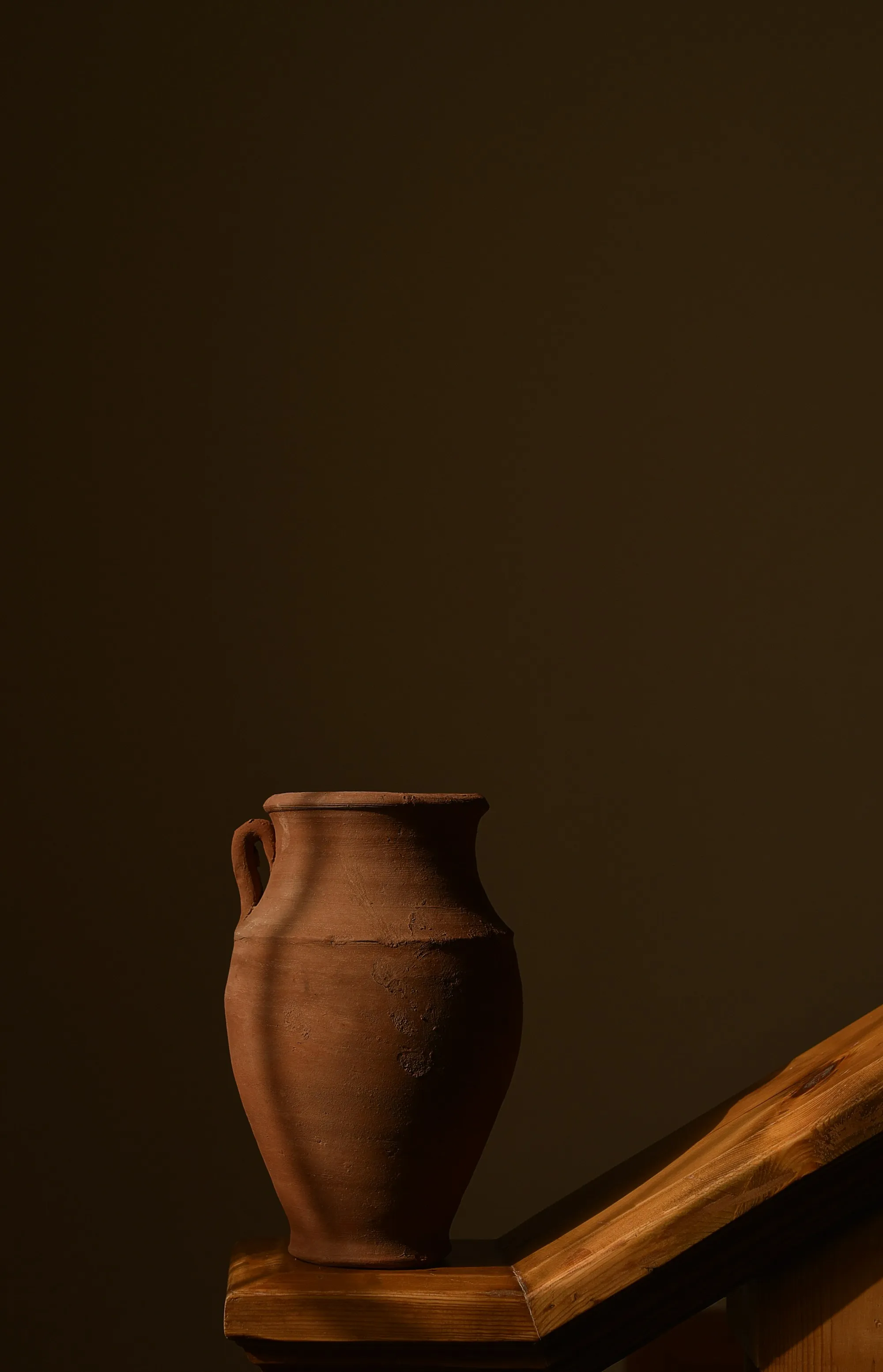
I bought it because the glaze changes near the foot. From across a room, the jar looks like a single warm color. Pick it up and there is a band of darker brown around the base, with a little bare clay below it. The uneven line keeps the object from becoming a silhouette. It makes me want to turn it a few degrees and look again.
The ceramics I keep have accumulated in this rather impractical way. A cup came home because of its handle, a bowl because it was pleasantly heavy when empty. They don’t make a matching set. Some sit together easily and others require a little space around them. When I rearrange the shelf, I am usually trying to solve a disagreement between two shades of brown.
Pick it up
A photograph gives a pot an outline and a point of view. It can describe the shine of a glazed surface very clearly, especially when a broad light falls across it. What it cannot give me is the first surprise of weight. A small cup may feel unexpectedly substantial, while a broad bowl can be so light that I readjust my grip as soon as I lift it.
The hand also notices where a picture encourages the eye to skim. There may be a shallow ridge beneath the rim or a rough patch around the foot. The handle that looked generous from the side may leave too little room for a finger. These are ordinary discoveries, although they often decide which cup I reach for each morning.
I turn things over in shops, with permission when it seems necessary. The underside interests me because the presentation usually stops there. A shelf hides it, and a product photograph often does too. An unglazed ring or a few irregular marks can make the construction of the object easier to imagine. I still don’t know exactly how it was made. I simply have more to look at than the polished front.
With an old pot, I also want to see what use has done to it. A small rub on the base is different from a decorative mark. The first came from contact with a surface, perhaps repeated many times. It belongs to the object as it is now. I don’t need to turn that evidence into a story about an unknown previous owner to find it interesting.
Some things stay
I am usually trying to solve a disagreement between two shades of brown.
A good arrangement lets these differences remain visible. Place three similar jars too close together and they begin to look like a coordinated purchase. Separate them a little and the shape of each neck becomes clearer. The gap between them changes how much attention I give to the curve of a shoulder. Sometimes moving one pot by the width of a thumb is enough.
What use leaves behind
My favorite cup has a thin mark inside that I haven’t managed to wash away. I know exactly where it is, and I still turn that part toward me. A new version of the same cup might be a better object by several practical measures. Mine has become easier to identify among the dishes on a drying rack, which is a modest distinction but one I appreciate.
I used to think that keeping an object meant protecting it from change. That made me strangely reluctant to use the things I had chosen most carefully. A bowl stayed at the back of a cupboard because its edge seemed vulnerable. Guests received the inexpensive plates. The shelf looked excellent, while the daily table had very little to do with my taste.
Taking the bowl down made the decision simpler. It could be a bowl that I used, with the ordinary chance of wear that involved. I could also keep it aside because I wanted to look at it. Either choice was reasonable. The awkward part had been pretending that I was saving it for an occasion that never acquired a date.
There are limits, of course. A damaged cup can be lovely to look at and unsuitable for drinking. I don’t need every retained object to remain in service. The cracked piece on the high shelf is there because of its profile against the wall. It has left the kitchen and become something I arrange by eye. That change is visible and uncomplicated.
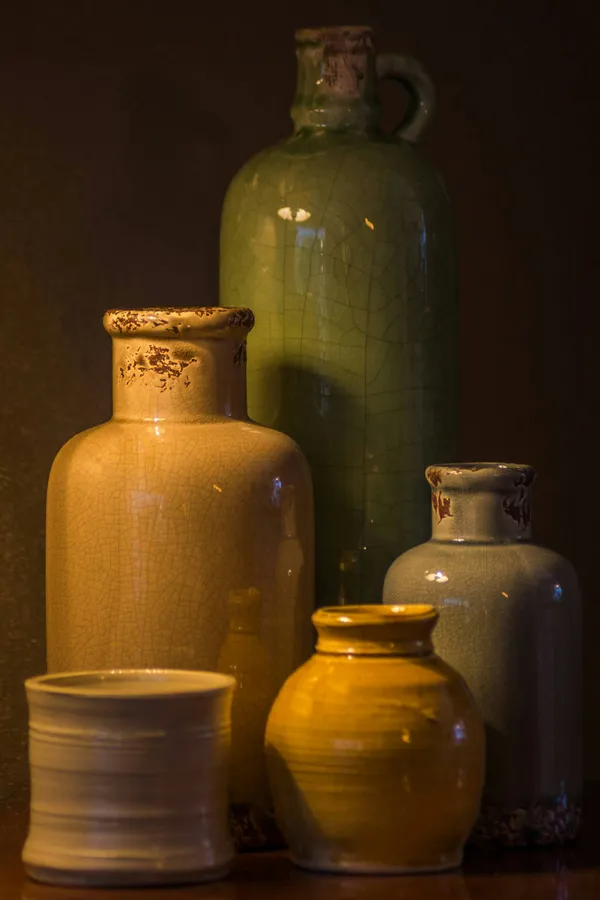
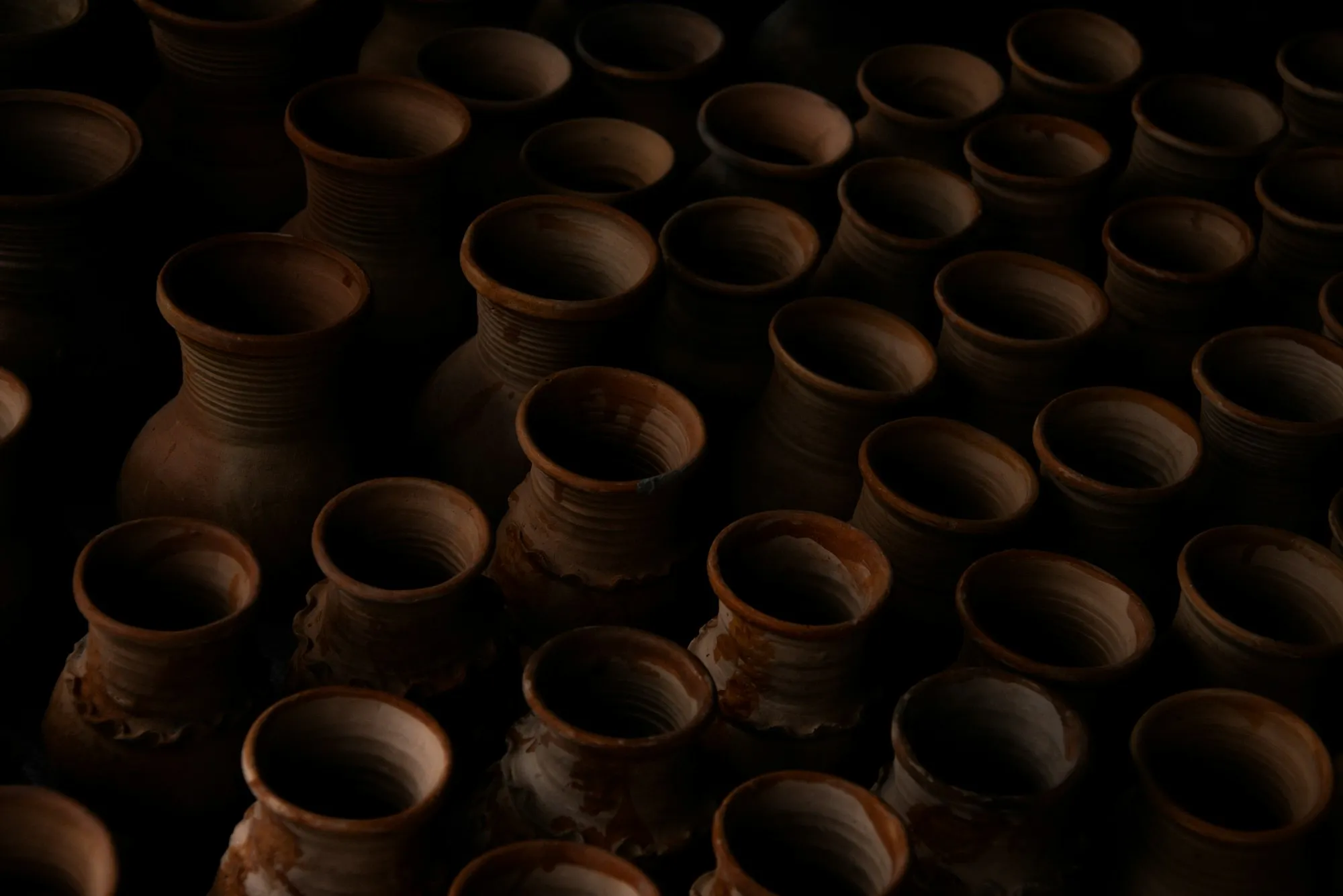
Photographing a group of pots can bring out the same distinction. One image may emphasize their uses, placing a cup near a saucer with enough room for a hand. Another can treat the same objects as shapes, with an opening visible only as a dark ellipse. I like both approaches. I get impatient when the arrangement makes a working object look so precious that nobody could comfortably touch it.
The shelf in my room is close enough to the window for its appearance to change. In the morning, the jars cast narrow shadows. Later, the light becomes flatter and the variations in glaze are easier to see. I have taken several photographs without moving anything, then found myself studying the wall behind the pots as much as the pots themselves.
Once in a while I put the whole group on the kitchen table. Away from their usual positions, several pieces look unfamiliar. A low bowl occupies more space than I remembered, and a small bottle nearly disappears beside it. I leave them there while I clean the shelf, then carry them back one at a time. The order in which I pick them up tends to determine the new arrangement. I have tried working from a photograph of the previous version. Moving the actual objects is easier.
A place on the shelf
The difficult part of keeping a collection small is admitting that liking something does not require bringing it home. There are bowls I would happily look at for a long time and have no desire to own. That leaves room for other pleasures: visiting a shop, handling an object carefully, setting it back where it was, and remembering its color incorrectly on the way home.
At home, limited space makes the editing more concrete. The arrival of a new piece means shifting something else. I carry a jar into the next room to see whether I still want it there. Occasionally an object I thought indispensable looks perfectly ordinary on a different shelf. Occasionally the opposite happens, and the new position reveals a detail that kept disappearing in the old arrangement.
I am wary of making this process sound more deliberate than it is. Some arrangements stay because I haven’t dusted behind them. A small vase spent months beside a stack of receipts. When I finally cleared the paper away, its proportions looked wrong in all that empty space, so I put a book next to it. A room contains this kind of negotiation alongside its more considered decisions.
The brown jar is still above my desk. It has acquired a pale chip on the underside, visible only when I lift it. Last week I tried it beside a taller green vessel and disliked the result. The green one went back to the kitchen. The jar returned to its old place beside the books, where I can reach it without moving the lamp.