
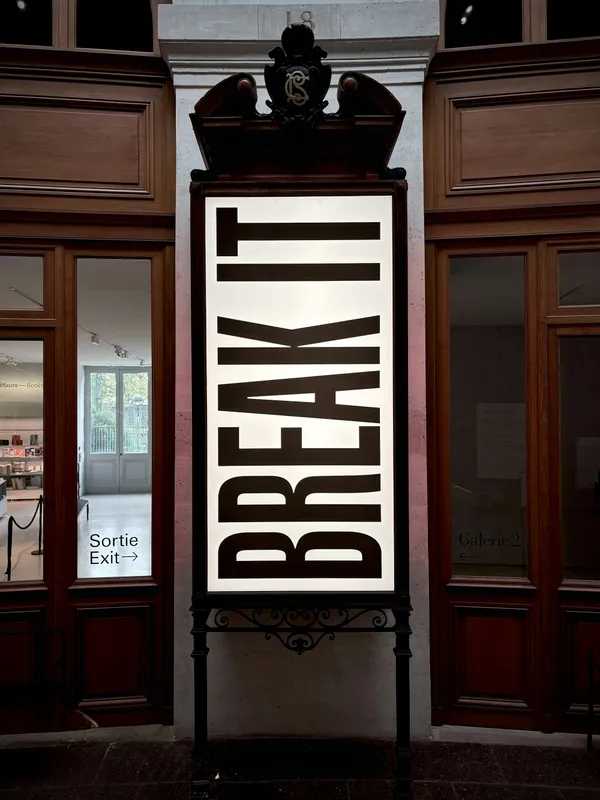
“BREAK IT” is an unusually direct thing to read at a doorway. Most signs around an entrance explain how to get in or tell you what to avoid doing once you arrive. This one seems to expect a more physical response. I like the gap between its blunt lettering and the ordinary business of passing through a door. Before anything has happened, the building has acquired the tone of a studio where an arrangement might be taken apart and tried again.
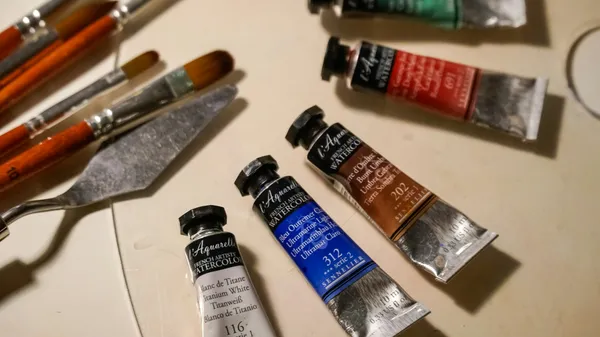
Inside my own working space, taking something apart is usually less dramatic. A strip of painted paper comes off a board. I lift a piece of cloth from under a small arrangement and find that the loose edge was doing more than I realized. The rejected version stays nearby for a while, because I don’t always understand what the new one has improved. The room accumulates evidence of decisions made with varying degrees of confidence. Some of it still has masking tape attached.
I used to tidy that evidence away too soon. A clean desk made it easier to start another task, and there was satisfaction in seeing a finished sheet with no earlier attempts beside it. But I sometimes returned to a layout and could no longer remember why I had changed it. The alternative had disappeared before I had learned enough from the comparison. Now I leave a few versions where I can reach them. The space is less orderly, but the work is easier to question. There is a difference between keeping everything and keeping a decision available for another look.