The first thing I notice in a studio portrait is often a patch of light that appears to have arrived by accident. It catches the side of a cheek or stops just short of an eye. Everything around it may be carefully arranged, yet that small change in brightness feels less settled. I follow it across the face before I think about the person looking back. By the time I reach the eyes, I’ve already begun making decisions about the picture.
That order interests me because it differs from the way I imagine I look at people. In conversation, I would say I pay attention to an expression. In a photograph, I’m also responding to a line separating skin from background, or to the weight of dark hair against a pale wall. The face is a person’s face, with everything that makes looking at another person complicated. It is also where the photographer has placed the light.
I like portraits that let me feel both things at once. Their construction remains visible without swallowing the person inside it. A sleeve can sit awkwardly. A mouth can hold an expression that refuses to become a smile. The picture has enough structure to hold my attention and enough room for an ordinary, slightly uneven human presence. I spend longer with those photographs than with the ones whose meaning seems to have been decided in advance.
What the light leaves out
Imagine moving a lamp a little to the side. The change sounds small until you watch what happens along a nose, or beneath a lower lip. Areas that had seemed continuous separate. A cheek acquires an edge. The background can become brighter than part of the face, pulling the eye outward before it returns. I don’t need to reconstruct the whole lighting setup to enjoy that effect. Following the border of a shadow is enough to make the photograph feel newly specific.
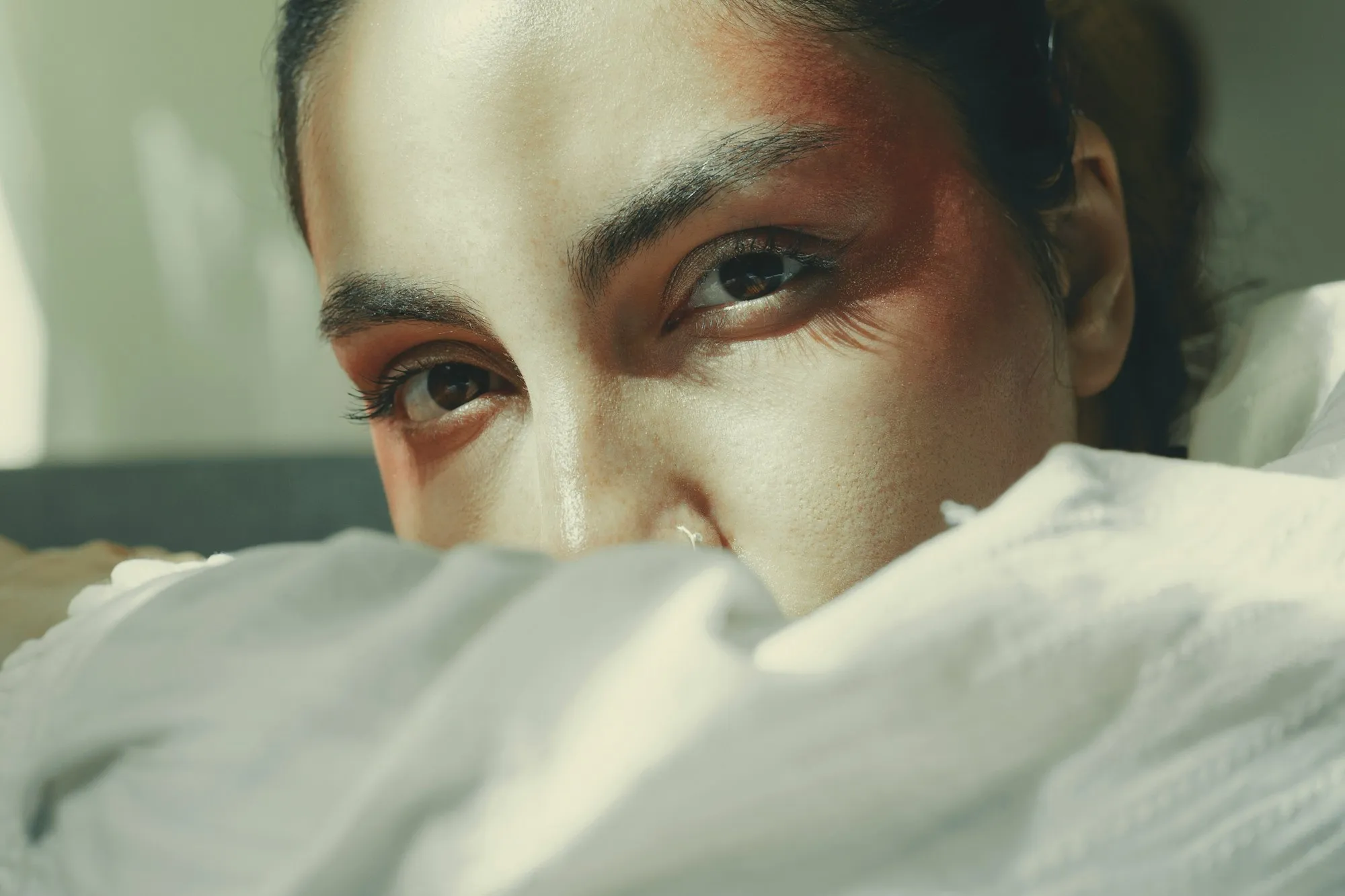
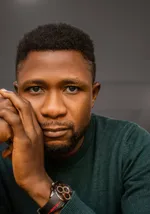
In the first portrait here, dark hair and warm light give the face a particular weight within the frame. Looking at it, I notice myself trying to turn a visual impression into a description of someone’s character. Serious, perhaps. Thoughtful. The words come easily, which makes me distrust them a little. A still image gives me an arrangement and an instant. Much of the personality I think I recognize may belong to the story I’ve brought along.
There is pleasure in keeping the description closer to the surface. An eye looks in a particular direction. The light changes as it crosses the skin. Hair obscures part of an outline. These observations sound modest on the page, but they take longer than a quick judgment. They also leave the person in the photograph some privacy. I can admire the picture without pretending that the angle of a head has introduced us.
This becomes especially apparent when I return to a portrait after looking at something else. A face that initially seemed remote can look open. A pose I had read as composed begins to feel temporary. Nothing in the file has changed. My eyes have arrived from a different picture, carrying its colors and its proportions. The first impression was useful, but it was never the whole experience.
Look a little longer
A still image gives me an arrangement and an instant. Much of the story arrives with the viewer.
On a printed page, the surrounding space makes that experience even more noticeable. A generous margin can allow a small portrait to feel physically close. Put the same image against the edge of a spread, and the face seems to occupy more of the room. I enjoy watching a photograph change through these ordinary decisions. They are part of how a picture reaches us, even when we only remember the person at its center.
Working at the edges
The crop is where I usually begin looking the second time. I follow the upper edge, then the sides, and ask what each cut is doing. A little space above the head may loosen the entire composition. Bring that edge down and the frame presses closer. Sometimes the most convincing version is the one that feels fractionally inconvenient, as though the subject has moved while the photographer was still deciding how much room to leave.
Hands are particularly good at disturbing a tidy picture. When they enter a portrait, they can introduce a second rhythm that the face doesn’t control. A wrist leans one way while a shoulder leans another. Even when the hands remain outside the image, I sometimes find myself imagining their position. The crop has created that curiosity. It has left just enough of a gesture visible to suggest that the body continues beyond what I can inspect.
I try a similar exercise when editing a sequence. I place a close portrait beside a wider one and look for the small adjustment my eyes make between them. Does the second image allow me to breathe after the first, or does it simply repeat the same distance? A sequence can become strangely flat when every photograph asks for the same kind of attention. One picture needs room to linger. Another can arrive abruptly and make the page feel less predictable.
On a contact sheet, the differences can be very small. Neighboring frames from the same sitting can have almost identical arrangements and feel surprisingly different. In one, a shoulder is still settling. In another, the expression has become a little more deliberate. Choosing between them requires me to describe the difference with some care. If I call one more natural, I want to know which visible detail has persuaded me. The word can hide as much as it explains, especially when everyone in the room knew a camera was there.
There is pleasure in keeping the description closer to the surface. An eye looks in a particular direction. The light changes as it crosses the skin. Hair obscures part of an outline. These observations sound modest on the page, but they take longer than a quick judgment. They also leave the person in the photograph some privacy. I can admire the picture without pretending that the angle of a head has introduced us.
The temptation is to choose the most forceful image every time. On its own, a photograph with a direct gaze and decisive lighting can seem impossible to leave out. Several such photographs together may start competing for the same space. I often find that a quieter frame gives the stronger one somewhere to go. An imperfect glance can change the temperature of a whole sequence more effectively than another beautifully resolved pose.
This is where captions can help by staying exact. A name or a useful note about the making of the picture can give the viewer something solid to stand on. A caption that describes an imagined inner life can close the photograph too quickly. I would rather be told what can be known, then allowed to make my own uncertain reading. That uncertainty is part of why I return to pictures in the first place.
A different distance
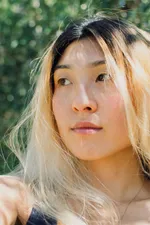
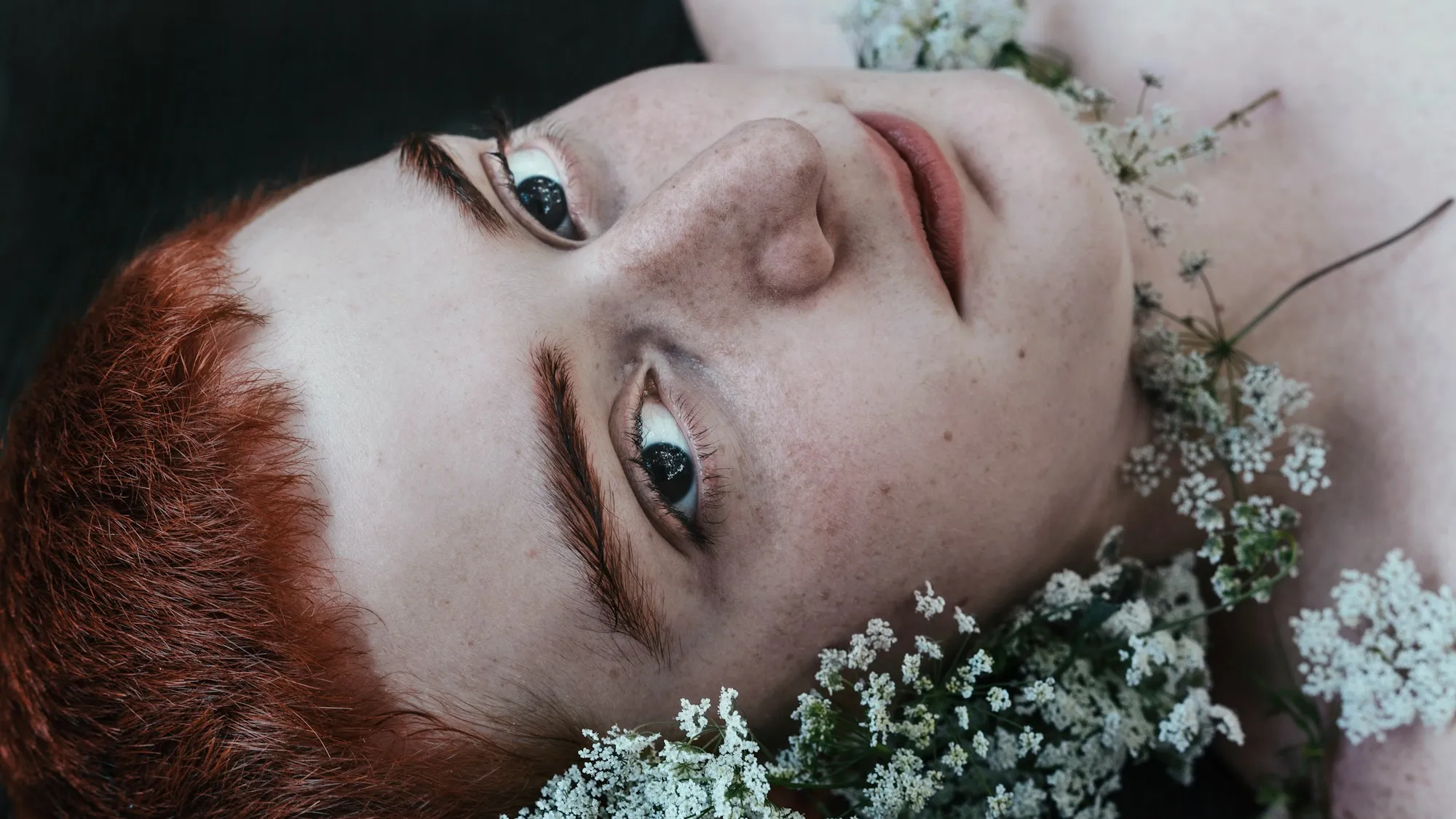
The second portrait moves into another setting. Short red hair and small white flowers bring different textures into the frame. My eye catches the repeated pale shapes around the face, then returns to the freckles. Those details give the image a more scattered movement than a plain studio background would. I find myself looking outward and inward several times, almost checking whether the face and its surroundings have changed places in my attention.
Putting the two photographs together makes me more aware of the setting in each. The studio gives its light a controlled boundary. The flowers bring a pattern that continues around the subject. Neither setting tells me what the person is thinking. Each gives the photographer a different problem of arrangement, and gives me a different route into the picture. That difference is enough to sustain a conversation between the images without asking them to illustrate a single lesson.
Color does some of that work before I have named it. Warm skin beside dark hair draws one sort of boundary. A small pale flower against a darker patch draws another. Once I start noticing those relationships, I can follow them across a page without treating every detail as a symbol. Sometimes a color is useful because it makes the next color easier to see. Sometimes a background remains interesting precisely because I cannot reduce it to a message.
There are practical interruptions, too. A reflection on the screen falls across a dark section, or the brightness of the room makes the warmer tones feel heavier. I shift my seat and discover another version of the picture. This ordinary adjustment brings me back to the physical act of looking. The photograph may be fixed, but seeing it happens from a particular place, at a particular distance, with light of its own around the viewer.
I don’t keep this degree of concentration for an entire afternoon. My eyes move on. A portrait becomes familiar, and I stop seeing the little decisions that first held me. Returning later is part of the pleasure. I might remember the light and discover that it was the space beside the head I wanted to see again. The photograph has waited without explaining itself further. I bring it closer, then move it back until the whole frame is visible.