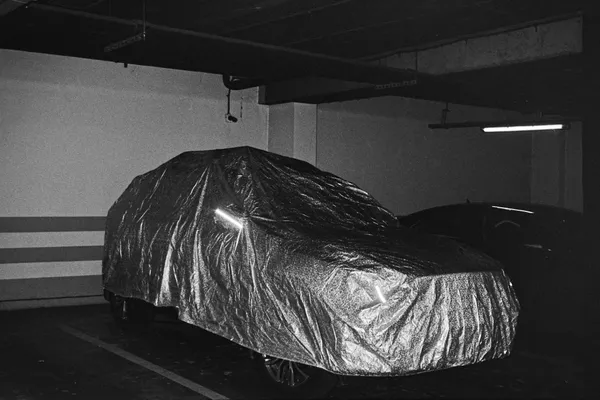
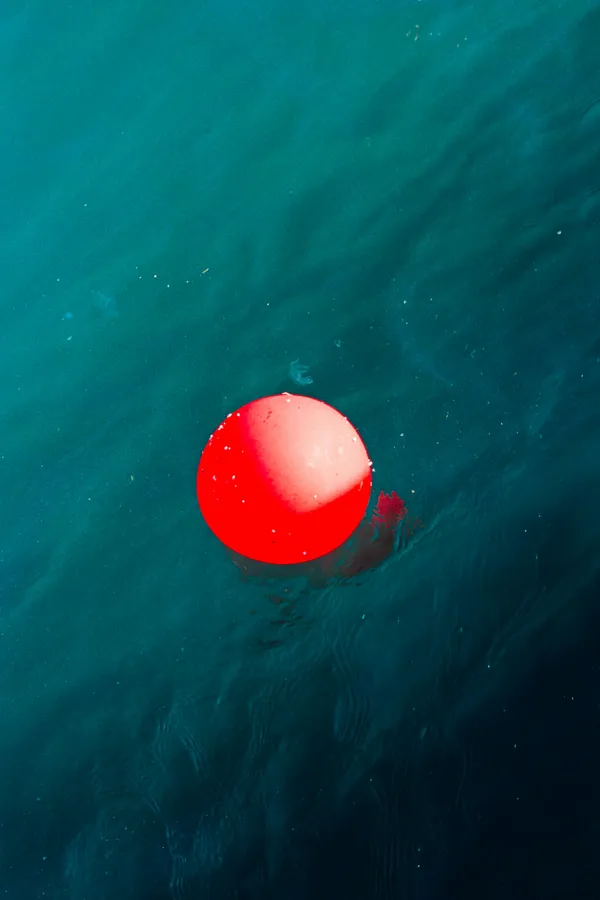
A bottle standing alone on a table divides the frame into occupied and empty areas. Its outline gives the background a shape that can be adjusted without adding another object. Move the bottle toward one side and the empty area becomes harder to ignore. It starts to look chosen. I usually notice this before I decide what else belongs in the picture. An arrangement can also be found away from the table: a round red object against turquoise water offers a clear contrast between a form and the space surrounding it.
On the table this morning, I have a pale bowl and a piece of folded card. The bowl’s rim is uneven enough to catch the window light in separate patches. The card is smooth, with one bent corner that keeps lifting from the surface. I turn that corner away from the camera, then turn it back. Its small shadow gives me a reason to keep it.
The first arrangement is too tidy. Everything faces the camera and sits at a polite distance from its neighbor. It resembles a display waiting for labels. I slide the bowl partly behind the card so that the rim disappears for an inch. Now I have to imagine the rest of its outline, and the two objects occupy the same space more convincingly.
A still life offers an unusual kind of control. You can make the same picture repeatedly while changing just one relation. That control makes a careless decision more obvious. A handle that almost touches the edge of a plate can be more distracting than a crooked background, because the near contact keeps asking whether it was intentional. I prefer either a visible gap or a definite overlap.
The space beside an object has an outline of its own.
A note from the table
I sometimes trace that outline on a scrap of paper. Around the bowl, it is a broad band that narrows where the card enters. Above the bottle, it opens into a tall rectangle. These shapes are easy to overlook when the objects have familiar uses. A cup invites you to think about drinking. Its handle, seen against a plain wall, also encloses a small irregular patch of wall.
Color can help separate those two ways of looking. When several objects share a similar pale tone, their edges carry more of the picture. A darker item changes the balance immediately, even if it is physically small. I try a wooden spoon beside the bowl and find myself looking at the spoon first in every version. Turning it over does little. Removing it changes the image more than any adjustment I have made so far.
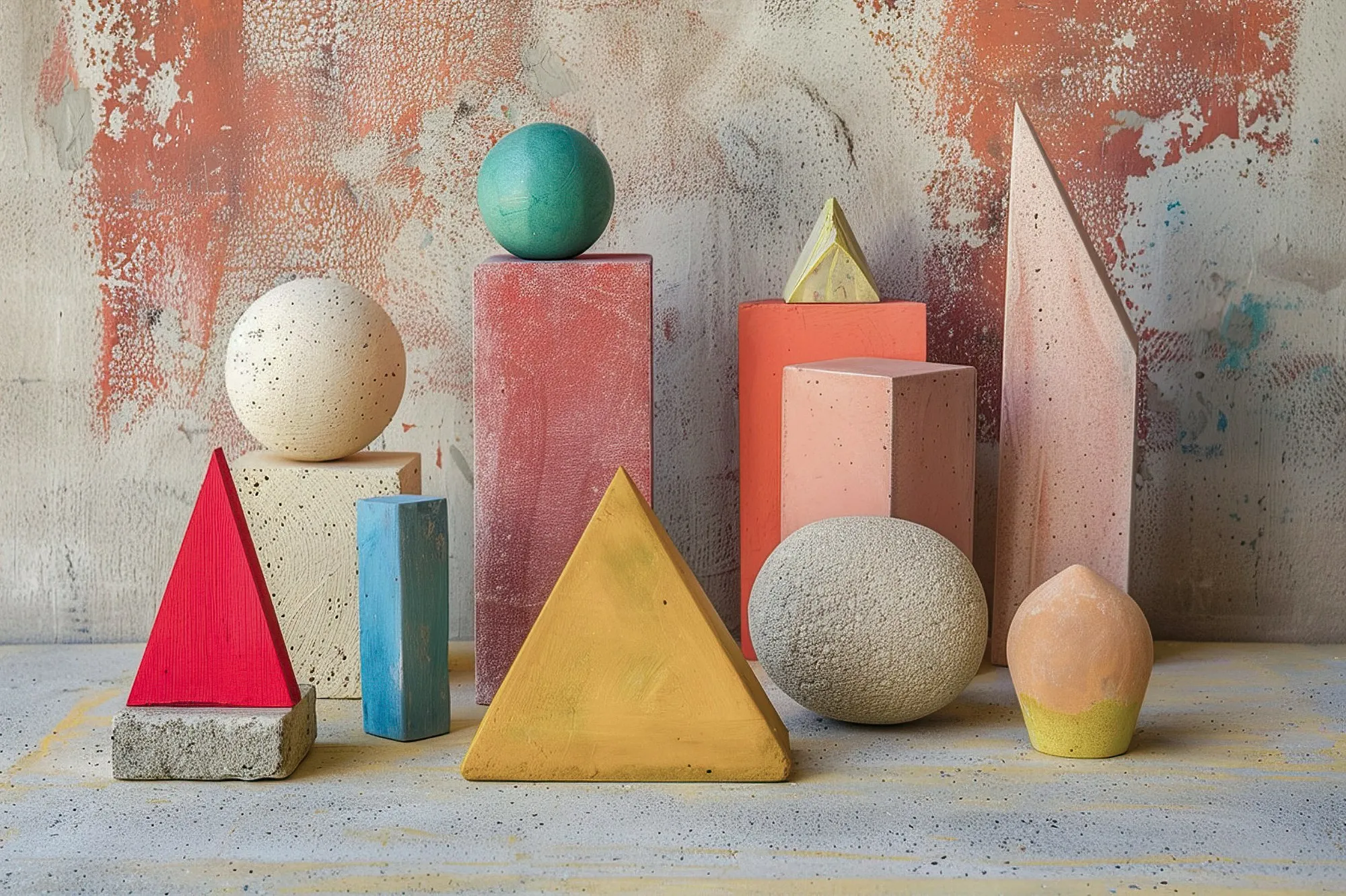
The geometric arrangement shown here makes those relationships especially clear. Each form has a readable edge and occupies a particular amount of the frame. With a useful household object, I can become distracted by its history or its purpose. A simple solid makes it easier to compare scale and placement, and to see how one surface receives light differently from the surface beside it.
Back at my table, the bottle presents a more troublesome surface. A bright reflection runs down its side, and moving the camera shifts that reflection toward the center. I put a large sheet of paper outside the frame to soften the transition. The paper becomes visible in the glass as a broad pale area. Half the arrangement is now happening beyond the photograph’s edges.
That is worth remembering when a finished still life looks effortless. A clean background may continue across a mess of clamps behind the camera. An object that appears to balance casually might be resting against something hidden. The photograph only needs to account for what it shows, although I like a setup I can leave standing while I step away to make a cup of coffee.
Height changes the picture as much as placement. From above, the bowl becomes an open circle with a strip of shadow along one side. Lowering the camera turns it into an ellipse and lets the bottle rise behind it. At table level, the bowl hides the folded card almost completely. I settle somewhere between the two positions, where both the opening and the outside wall remain visible.
I make a few photographs without touching the arrangement. The window light is moving across the table slowly enough that I can compare them afterward. In one frame the bowl’s shadow reaches the card. In the next, a narrow bright gap separates them. The objects are unchanged, but that gap makes the second picture feel less crowded. I keep both versions long enough to check that the difference survives at a smaller size.
There is a point when adding another thing becomes a way of avoiding a decision about what is already there. I reach for a length of fabric and set it down before it enters the frame. Its folds would give me more to arrange, but the unresolved part is still the distance between the bowl and the bottle. I move the bottle back by the width of a finger.
The final photograph includes the card’s bent corner. It also includes a slight difference in color between the wall and the paper covering the table. I could remove that difference while editing, though it tells me where the tabletop ends. After taking the camera away, I mark the bottle’s position with a small piece of tape. The next time I use this table, I’ll have a precise place from which to start moving it.