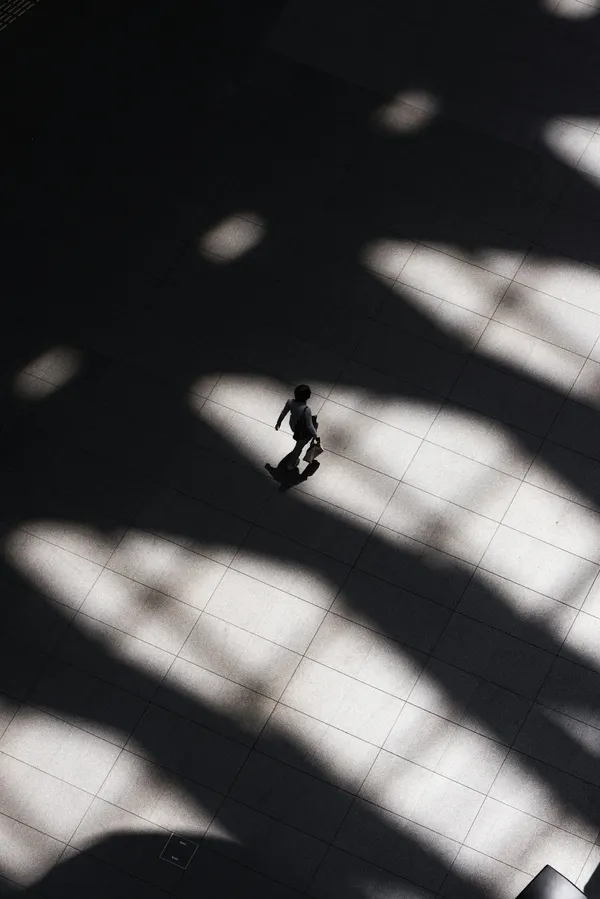
Seen from above, pavement becomes a field of light and a passerby changes the composition. An essay on framing the street while leaving room for a person to interrupt the plan.

Streets seen on foot, rooms seen from a chair, and buildings read through their smallest details. Follow the journal outside and find a different position from which to look.
Seen from above, pavement becomes a field of light and a passerby changes the composition. An essay on framing the street while leaving room for a person to interrupt the plan.
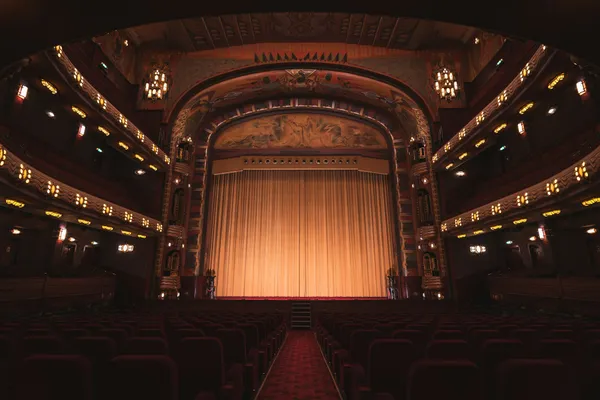
Empty red seats face a closed gold curtain. A look at the theater before an imagined audience arrives, moving from the shape of the auditorium to the closer details of seating and the work around stage lighting.
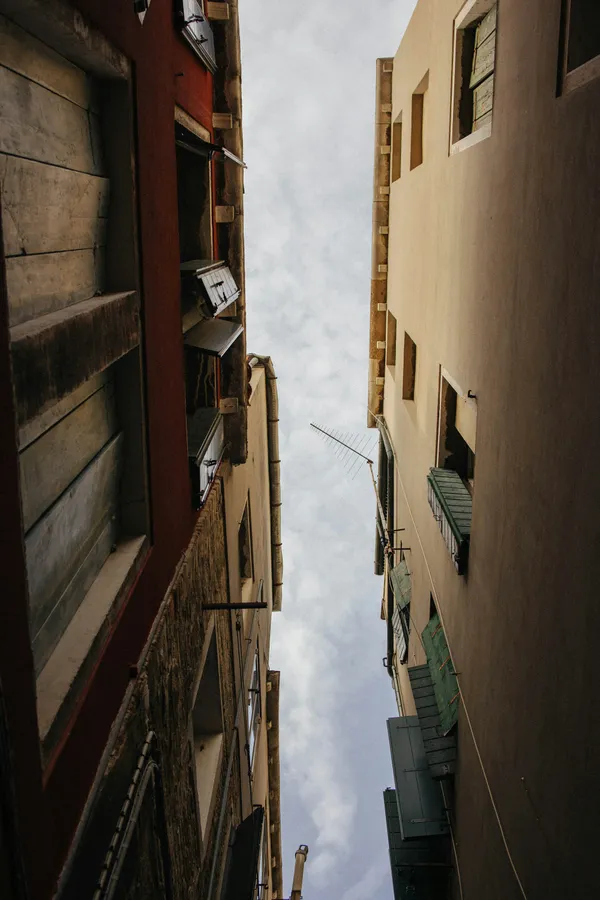
Above the shopfronts, another city runs along the same streets. A walk with the camera tilted upward, following rooflines and the awkward spaces between buildings while keeping a place for the ground below.
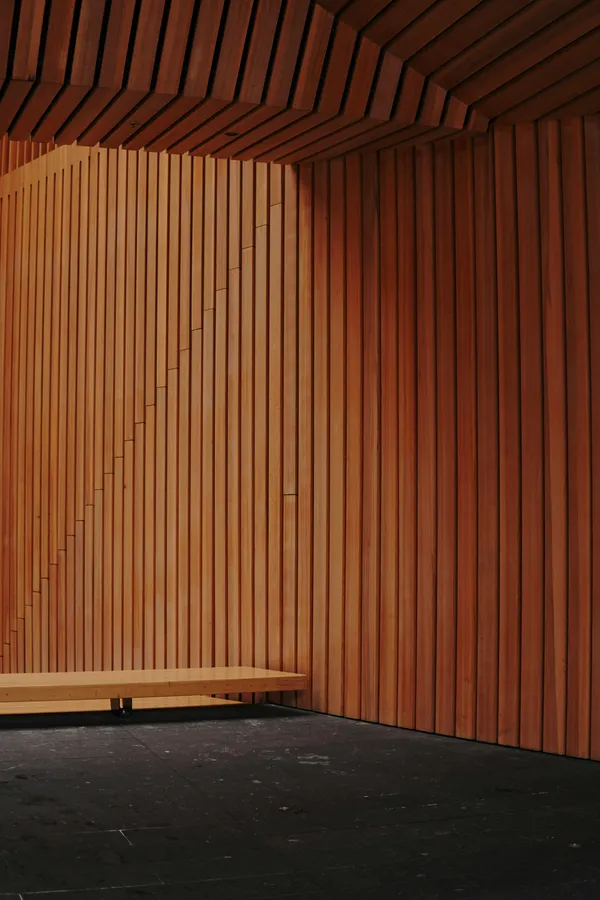
A small bench against warm wood paneling gives an interior somewhere to pause. From that quiet arrangement, a look at public seating and the decisions that let people stay in a place they usually pass through.
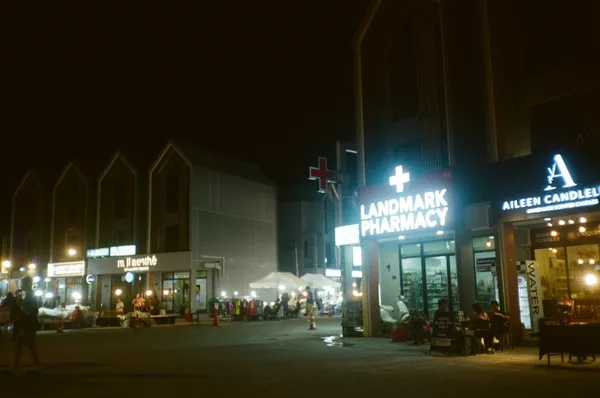
When the daylight goes, a familiar street acquires competing colors. Following green window light and an orange doorway through a few photographs made after the shops have closed, with enough darkness left between the brighter areas.
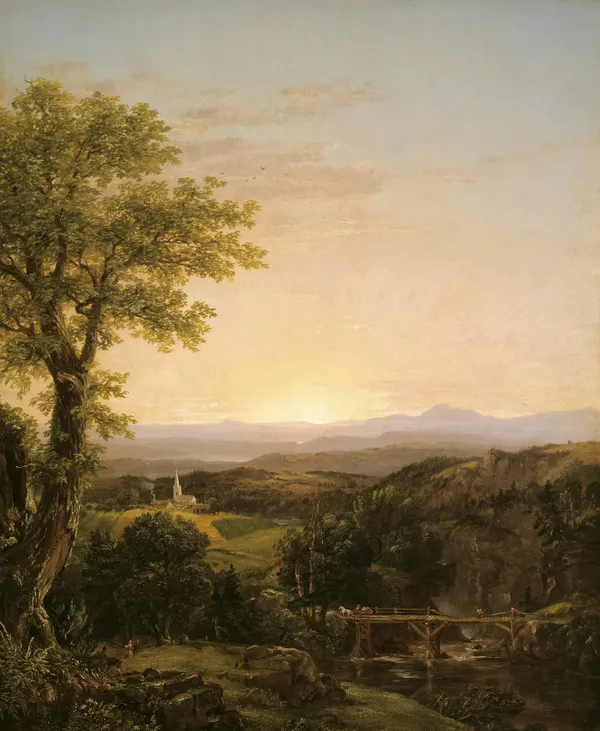
A small bridge crosses dark water beneath a warm, open landscape. Following that near passage into the picture reveals how a large tree, a glimpse of a building, and the bright distance give the eye different places to settle.